


 PIADMIN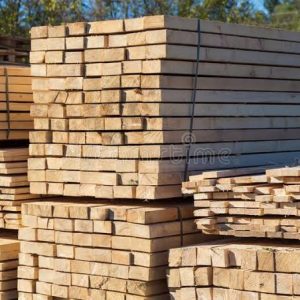

Following the news on the Nigerian Government lifting of ban on charcoal and processed wood export, President of United Furniture Association In Nigeria (UFAN), Prince (Dr.) Emeka Egwuekwe, and the entire association are of a different opinion concerning the lifting of ban.
Through a letter addressed to the Hon. Minister, Federal Ministry of Environment, Abuja, Prince Emeka explains “I do not believe that those who researched on these products- charcoal and processed wood are sincere in their discovery and economic recovery for Nigeria. The gains expected by the country supposedly on lifting of ban on charcoal and processed wood will be far below. The gains that will accrue from the coal and wood products in form of furniture would greatly contribute to our economy than exporting charcoal and processed wood. If we start falling of trees now for the purpose of getting large quantity of charcoal for export, we would have supported the desert encroachment hazard which led to the ban on charcoal which was initially decided”
He further explains that the Nigerian Government introduced the program of tree planting for this purpose. Even many parts of Nigeria especially Borno state the desert environmental hazard is expanding rapidly.
Asians like the Chinese, Turkish and even the Indians have invaded our forests, falling our wood, timbers, and other economic trees and massively taking them to their countries. What this have done was to relegate our wood and furniture industry to non competitiveness among manufacturers in Nigeria, thereby making foreigners to rob us of our gifted resources.
He added “As president of the furniture association of Nigeria, I am fighting for what will bring more productivity for the wood and furniture manufacturing industry in the Long term.
If competition in this regard persists in wood market, real producers will attempt to heighten qualities and increase production. What will be the fate of Nigerians when our processed woods are exported?
Where will the local wood industries obtain their raw materials?
This policy of the government on lifting the ban of charcoal and processed wood does not protect the interest of Nigerians who are in this industry.”
He explains further “We thought that the policy was to encourage and attract foreign investment into Nigeria, not to allow or make our citizenry remain in poverty. For instance, the charcoal we are talking about is coal. This coal is a black rock consisting of many carbon formed from the remains of ancient tree and other vegetation used as fuel.”
RECOMMENDATIONS
In Enugu state Nigeria, there is a coal field rich in underground coal but it has been abandoned by the Federal Government of Nigeria.
This is where the Government should have invited foreign miners to come and do business in Nigeria. Coal-tar which is a thick black liquid distilled from coal containing organic chemicals is used for building roads and waterproofing leaking house roofs. Imagine the amount of foreign exchange or revenue we could have gotten from this coal field if we had harnessed it. Many roads in Nigeria are begging for attention, many roads are also with pot holes and some are un-tarred. Many countries in African especially in ECOWAS sub-region and some other ancient countries lack good or motorable roads.
The Nigerian government should have been in a position to market and sell our coal-tar to them for their roads.
The government lifting of ban on charcoal and processed wood would hamper the efficient steps taken by the Manufacturers Association of Nigeria (MAN )to project the quality promotion and development of the wood and furniture industry for export.
In Conclusion, It is our advice and as a major campaign program of the United Furniture Association to stop the lifting of ban on charcoal and processed wood. Afforestation law must be re-enacted to stop falling of trees.
Federal government should establish or create wood and furniture industrial clusters to help Nigeria’s economy. It is our believe that if you do this, it will yield more than the billion-dollar revenue that was postulated in the copy of the publication attached.
In Nigeria today, the competitive wood and furniture market has been the main factor contributing to the profitability of industrialists which has brought about the flourishment of the Nigerian economy.